

Learning with The Autism Project©
At The Autism Project, we believe education is intervention. After a diagnosis, families must learn a new language and new approaches to parenting and supporting their child. Understanding autism and how it uniquely presents in their child is essential to providing meaningful, evidence based, effective support.
When educators and families have a shared understanding of autism, collaboration strengthens, and children benefit from a coordinated, strength-based approach to support.
The following workshops are designed for parents and caregivers. Custom options are available upon request
2026 2027 Parent Workshops Catalogue
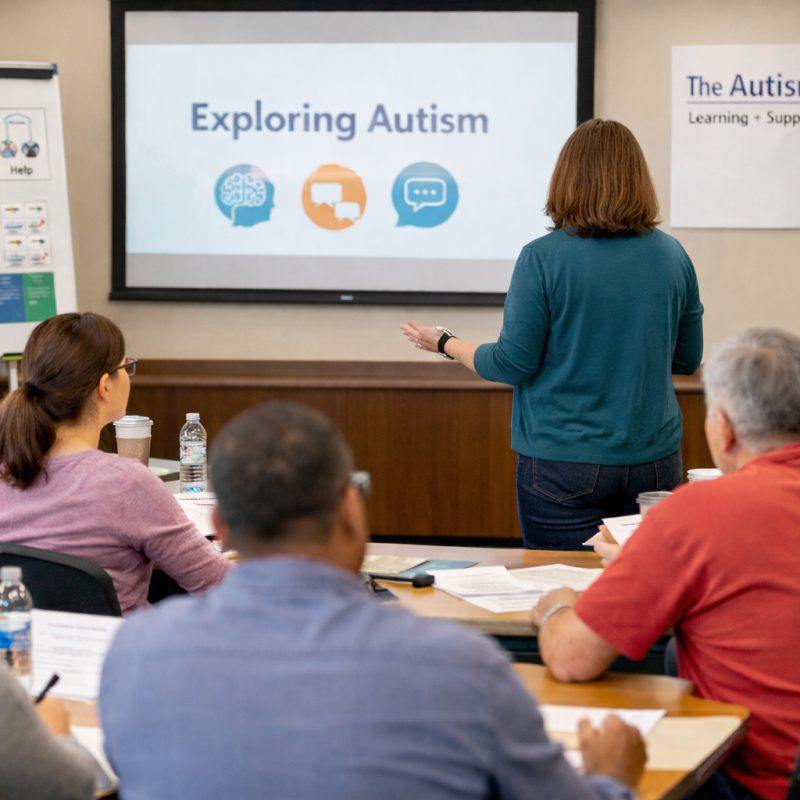
Exploring Autism for Parents and Caregivers
In Exploring Autism, parents and caregivers build a foundational understanding of the two core diagnostic categories associated with autism and explore how these differences influence communication, regulation, and overall lived experience. Families will leave this training with a greater insight into their child’s unique way of experiencing the world, and a deeper sense of connection and understanding.
Recommended for ALL participants.
Supporting Communication
In Supporting Communication, parents and caregivers deepen their understanding of communication differences in autism and how these differences shape connection, expression, and daily interactions. Together, we explore the many forms communication can take—both verbal and nonverbal—and discuss practical, regulation-informed strategies to support children as their communication develops and evolves.
Recommended Prerequisite: Exploring Autism
Visual Supports in Practice
In Visual Supports in Practice, parents and caregivers learn how to create and implement visual supports to increase independence, strengthen communication, and reduce frustration at home. Participants explore practical ways to teach concepts such as “wait,” “help,” and requesting a “break” using visual tools that support regulation and clarity.
Families are also introduced to Social Narratives and other supportive strategies that help explain upcoming situations and guide children through them with confidence. The session concludes with practical instruction on using visual countdown timers to support smoother, more predictable transitions.
Recommended Prerequisite: Exploring Autism
Proactive Behavior Supports
In Proactive Behavior Supports, parents and caregivers explore how to respond to behaviors at home through a regulation-informed and neuroaffirming lens. This training provides practical tools to help families understand behavior as communication and to identify the underlying needs driving it.
Participants examine how communication differences, nervous system regulation, co-occurring conditions, and environmental factors may influence behavior. Through this lens, families learn proactive, therapeutic strategies that support their child’s unique neurology while strengthening connection and long-term wellbeing.
Recommended Prerequisite: Exploring Autism
Sensing Our World
In Sensing Our World, parents and caregivers explore how sensory processing shapes their child’s daily experiences. Many autistic individuals experience sensory input in heightened, reduced, or fluctuating ways.
Participants are introduced to the eight sensory systems and gain practical, regulation-informed strategies to better understand and support their child’s unique sensory profile at home and in the community.
Recommended Prerequisite: Exploring Autism
Positive Advocacy
In Positive Advocacy, parents and caregivers learn how to confidently navigate the complex systems that often accompany an autism diagnosis. Families explore how to build collaborative, strengths-based teams of professionals who support their child’s growth and wellbeing.
Participants are introduced to key components of special education law, including IDEA, IEPs, and 504 plans, and gain clarity on how these protections and supports can benefit their child.
Recommended for ALL participants.
Toilet Training
In Toilet Training, parents and caregivers learn practical, regulation-informed strategies to support children of all ages in developing toileting skills. This workshop explores how sensory processing, communication differences, interoception, and predictability can influence the toileting process.
Participants are introduced to visual supports, structured routines, and sensory-based strategies that promote independence while reducing stress for both children and families. The training emphasizes patience, readiness, and honoring each child’s unique developmental timeline.
Recommended Prerequisite: Exploring Autism