


Voices of the Spectrum: Conversations with TAP's Autistic Adults #11
Welcome to another installment of Voices of the Spectrum, a series dedicated to sharing the authentic stories, experiences, and perspectives of autistic adults within The Autism Project (TAP) community. Each interview highlights the individuality, strengths, and lived experiences of our members.
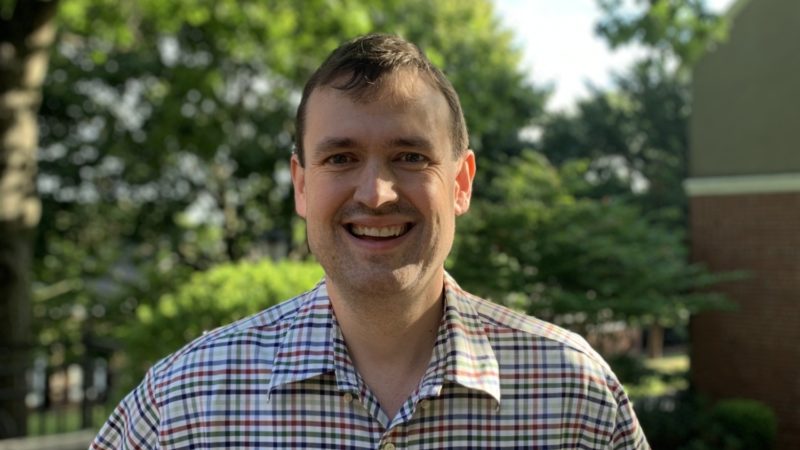
In this installment, we’re sharing a conversation with Adam, who reflects on receiving an autism diagnosis in adulthood, navigating work and family life, and learning what it means to move from surviving to thriving. Adam’s responses offer thoughtful insight into masking, sensory regulation, and the need for meaningful adult supports.
Below, you’ll find my questions in bold, followed by Adam’s responses in regular format.
What is your name?
Adam Telford
Do you refer to yourself using person-first or identity-first language (person with autism or autistic person)? Is there anything you want people to know about why you choose that language?
I don’t really have a preference. I tend to say “autistic person,” but many people at my school say “person with autism.” It doesn’t bother me either way, and it doesn’t make me feel any less human.
When were you diagnosed with autism? How did you feel about getting the diagnosis? How did getting the diagnosis impact you?
I was diagnosed a little over a year ago after a neuropsych evaluation following a mental health crisis. We later realized that the crisis was likely related to vitamin deficiencies, but the evaluation led to my autism diagnosis.
My daughter and I were diagnosed at the same time, so we’ve been learning about autism together as a family. The process has been harder for me as an adult. There are more resources for children, even though there is also more paperwork. After my diagnosis, I kept hearing how helpful Occupational Therapy (OT) could be, but I couldn’t find adult OT services.
For adults, support is very limited. I was handed a page with a phone number and told to call it, without any explanation. Just because I’m forty doesn’t mean this is easy to navigate.
There’s a misconception that if you make it to adulthood, you should have everything figured out. The truth is, many of us got here by masking. When we stop masking and try to do things differently, it can feel like starting over.
How did you feel about getting that official diagnosis?
Overall, it was a positive experience because it helped explain things I had noticed for years. At the same time, figuring out what to do after a diagnosis can be complicated.
Lowering your mask can bring relief, but it can also feel uncomfortable. There’s a balance between masking and taking care of yourself, and that balance isn’t always clear.
Do you have any special interests or hobbies? What are they? What do you enjoy about your interests or hobbies?
My interests are pretty niche. I enjoy programming, security algorithms, and building desktop applications. I like working with computers because there’s no guesswork. I give instructions, and I know exactly what will happen.
Computers were also a practical choice for me growing up. They didn’t take up physical space, and they were an emerging field when I was younger.
I also design board games and enjoy the puzzle aspect of it. I’ve joined board game groups, and while I’m not especially good at it, I enjoy the process.
Are you employed or do you volunteer? Is there anything you want people to know about your job?
I earned a general engineering degree from Roger Williams University. After college, I received a job offer working on bridge construction for the Connecticut Highway Department, but I chose to go into nonprofit Christian school teaching instead.
I started as a middle and high school math teacher, then transitioned into Information Technology (IT) when the previous IT person left. After that, I worked as an IT Director at several schools and led IT departments for motorcycle companies and financial institutions.
I currently work as the Director of Information Technology at St. Andrew’s School. This role works well for me because I can focus deeply and still have time alone to decompress. Having my own office is important for my regulation.
How and when did you first become connected to The Autism Project? Is there anything you would like to share about your connection with The Autism Project?
The Autism Project and Occupational Therapy have both had a big impact on me. I see OT from two perspectives, through my daughter and through my school, which has a full autism program.
When I first attended sessions at The Autism Project, I didn’t understand the purpose of Unity Community. We did crafts and puzzles, and I wasn’t sure what the learning objective was. Once discussions were introduced, it made much more sense to me.
I’m still working on understanding the social aspect, but I’ve appreciated the opportunity to learn and reflect.
Do you like spending casual time one-on-one with people, in small groups, or in large parties?
I hate large parties. I strongly prefer one-on-one conversations or small groups. Neurotypical people often redirect conversations naturally, and that’s something I struggle with.
What are your favorite things to do with friends or family?
I don’t have many friends. At home, once it hits 8:00 p.m., my wife and I stop heavy conversations and wind down together, usually watching a murder mystery with snacks.
One of my favorite childhood memories is visiting my great-aunt’s house, cooking, doing puzzles, and later listening to adults talk as I fell asleep. I enjoy listening and observing without needing to fully participate.
How did you meet your wife?
I met my wife at Roger Williams University through InterVarsity Christian Fellowship. We were both dating other people at the time, but I told her I thought we should be dating each other.
We dated throughout college, got married in 2008, and have been together ever since. We now have two children.
What accomplishments—academic, personal, or professional—are you most proud of?
I don’t think about accomplishments very often.
I created a video game for a prestigious university, which felt meaningful. I also received the Next Tech Generation Award from Rhode Island Monthly, though I don’t enjoy awards or recognition and usually ask not to receive them.
What are some goals you’re working toward? Personally, professionally, or academically?
My main focus right now is supporting my daughter and understanding her autism and ADHD so we can help her reach a sustainable place in life.
I’ve also been working with a health coach on memory challenges. My neuropsych showed significant memory difficulties, but I realized that OCD-related checking behaviors play a role. I’m working on systems to reduce that.
Right now, my priorities are my daughter, my wife, and addressing trauma I’ve suppressed for much of my life related to adoption.
What do you want more people to understand about autism, especially in adulthood?
We’ve figured out how to survive, but not how to thrive. Those are very different things. I believe organizations like The Autism Project are helping autistic adults move toward thriving.
Making friends and building community as an adult is hard, especially without the built-in structure of school.
What do you want employers to understand about autism?
Employers often want to be supportive, but sometimes support is framed as helping autistic employees appear more neurotypical. While well-intended, this can create anxiety and unrealistic expectations.
For example, social events that are optional for most employees may feel expected or required for autistic employees, which can add stress rather than support.
What do you want colleagues to understand about autism?
Many people don’t realize that tools like earplugs or fidget items help autistic adults regulate sensory input and stay engaged. Wearing earplugs doesn’t mean I’m not listening, and using something like TheraPutty doesn’t mean I’m not paying attention.
These supports are often understood and accepted for children, but they’re sometimes misunderstood when adults use them. That’s been my experience, though I also know I’m not always good at reading how others perceive me.
If you have a non-autistic romantic partner, what do you wish romantic partners understood about autism?
My wife sometimes gets frustrated that I don’t notice things, especially during family conversations. If something isn’t directed at me, I often don’t register it.
There’s a difference between not wanting to do something and not yet knowing how. Everything competes for attention, and filtering that is difficult.
What do you think doctors should understand about autism?
Adult Occupational Therapy is extremely difficult to access. My insurance covers it, but finding providers for autistic adults is nearly impossible.
OT has been one of the most helpful supports I’ve seen. Adult-focused OT covering sensory tools, regulation strategies, and self-understanding would make a huge difference.
What are the greatest misunderstandings about autism?
One major misunderstanding is the idea of fixing or curing autism. I see autism as a minority experience, not something broken.
It’s similar to forcing a left-handed person to be right-handed. The world may be built a certain way, but that doesn’t mean the person is wrong.
Is there anything else you want people to know about you?
I used to think I wasn’t a masker because I’m blunt and direct. What I’m realizing now is that I’ve suppressed emotions and made choices based on safety rather than desire.
Just because something is deeply ingrained doesn’t mean it’s helpful, and it doesn’t mean it can’t be examined.
Thank you for taking the time to read this installment of Voices of the Spectrum. Adam’s reflections highlight the importance of listening to autistic adults, especially when it comes to adulthood, employment, relationships, and access to appropriate supports.
Each conversation in this series helps deepen our understanding of the diverse experiences within our community and reinforces the value of honoring autistic voices as they are. We look forward to continuing to share stories, insights, and lived experiences in future installments.
Gianna Cambria
Marketing & Communications Officer