


Voices of the Spectrum: Conversations with TAP's Autistic Adults #10
Welcome to another installment of Voices of the Spectrum, a series dedicated to sharing the authentic stories, experiences, and perspectives of autistic adults within The Autism Project (TAP) community. Each interview highlights the individuality, strengths, and lived experiences of our members.
Below, you’ll find my questions in bold, followed by David’s responses in regular format.
What is your name?
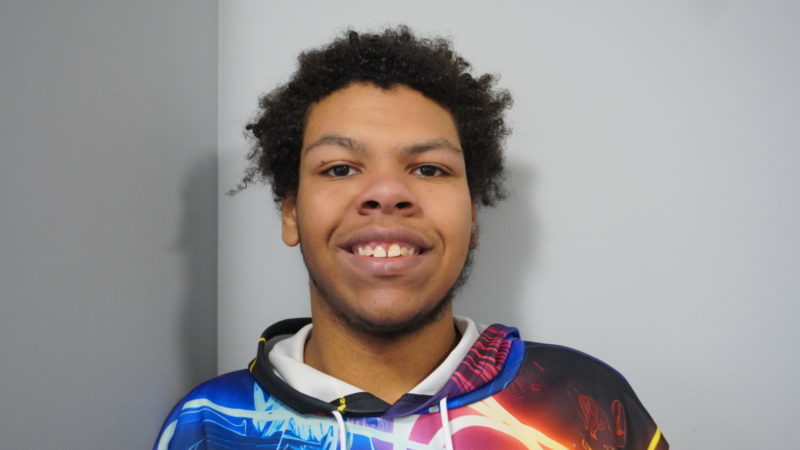
David Sims
Do you refer to yourself using person-first or identity-first language? Why?
Autistic person. I choose to say autistic person because I have autism, and that makes me an autistic person.
When were you diagnosed with autism? How did you feel about the diagnosis, and how did it impact you?
I was 17 years old when I was diagnosed with autism. They already knew I had autism for a while, but they finally decided to diagnose me. During the diagnosis, they asked me a lot of questions. Because of my diagnosis, I get to attend autistic programming now.
I also have ADHD, OCD, dysgraphia, dyscalculia, anxiety, and separation anxiety. Dysgraphia and dyscalculia basically make it so I can’t write or do math. OCD causes me to compulsively do things, such as wash my hands. I wash my hands about 20 times a day because that’s what makes me comfortable. ADHD makes me hyperactive. All these disorders don’t really affect me anymore because I have learned to cope with them.
I also might have two other disorders, which are DID and I suspect ASPD. ASPD is the lack of empathy, and DID is dissociative identity disorder (also known as multiple personality disorder).
Do you have any special interests or hobbies? What do you enjoy about them?
Science, anime, video games, psychology, learning about other medical conditions, and things like that. I like learning about medical disorders because I have a bunch of rare ones. I have sickle cell trait, anemia, and a bunch of others. Learning all this medical terminology is fun to me.
I like gardening as well. I like that some of my special interests are incorporated into the adult groups here because it’s fun—such as maintaining the garden.
Are you employed or do you volunteer?
I volunteered at the water park, but I have never worked anywhere. When I volunteered, I watched the kids with special needs. They would come during a certain time of day. Sometimes I would watch the kids in my neighborhood as well. We would play games like hide and seek, and manhunt.
If you do not have a job, would you like one? What job would you like?
I would be interested in working at a place with kids with special needs or rare medical problems. I would feel the most comfortable working in this field.
How and when did you first become connected to TAP?
After my house burned down, JodiBeth, one of the Family Support Specialists, met with me and gave me a card. I saw her at one of the Lifespan hospitals. My house burned down last year on January 5th. I basically just woke up, saw a fire, and my mom came to get me. After I got out of the house, I just sat in the car and watched it burn down. After the fire, we went into a hotel and eventually got a new house. Most of our stuff got burned.
It’s been fun here. I like it because there are autistic people, and some of them also have rare medical disorders. It makes me feel comfortable being in a place where there are similar people to me. I have made many friends: Lily, Dash, Michael, Quincy, PJ, Zachary, Triston, and many more. I love coming to Karate—it’s my favorite group here—and I like Sensei Mike. At Camp WANNAGOAGAIN!, I met Liv, Jasmine, and Theo.
Do you like spending time one-on-one, in small groups, or in large groups?
Large groups, because there are many people to talk to.
What are your favorite things to do with friends or family?
To hang out with them.
Do you have a romantic relationship or partnership?
No, I have never dated anyone. I don’t really see a point in doing so. I don’t have much empathy. I only have cognitive empathy, which is when I have to force myself to try to empathize with a person. But the person has to be similar enough to me for me to be able to. The less a person is like me, the less I can try to empathize with them.
What accomplishments are you most proud of?
I am most proud of science—mainly the fact that I know more about it than most people. I also know computer programming. I learned it myself by reading books about it. I also taught myself a lot of psychology. I enjoy reading books. I read textbooks, novels, and Japanese manga.
What goals are you working toward—personally, professionally, or academically?
I want to go to Japan because I like it. There are large amounts of neurodivergent and disabled people in a certain area. Someone from Japan told me there’s a place, specifically in I think Shiga Prefecture, where there’s a school built for disabled people. I would like to visit that school. The flight is about 14–15 hours from Rhode Island.
I want to sell robots that I build myself in the future.
What do you want more people to understand about autism, especially in adulthood?
That you cannot cure it. That it does not make you less smart.
What do you want employers to understand about autism?
That I can completely understand people’s emotions because of SPD. I can understand people’s emotions, but I cannot feel them. I can mimic other people’s emotions. I have specifically practiced how to act neurotypical just in case I go somewhere and they don’t like autistic people. Then I can pretend that I am neurotypical enough to walk away.
What do you want colleagues to understand about autism?
That I understand basically everything. I can even understand sarcasm, even though they think I can’t.
What do you want doctors to understand about autism?
They should not tell the autistic person that they are overreacting. For example, if the autistic person says they have something, they should actually look into it instead of telling them that they are a hypochondriac. This has personally happened to me, and it annoys me. I have told them my concerns, and they have just said, “It’s just the autism.”
I go to the doctors often because they check my ears. I sometimes get ear infections because I have overly sensitive ears. I was technically born deaf, but they put tubes in my ears so I could hear. I was also born mute.
What are the greatest misunderstandings about autism?
That autism is only “low functioning.” When someone hears the word autism, they immediately go to the stereotype of the autistic person not being able to do anything. People should not stereotype because there are different kinds of autism.
Is there anything else you want people to know about you?
I understand more mental disorders than people believe I do. I keep telling my doctor that I have ASPD, and he tells me it’s just autism. Though technically, I do meet most of the criteria. Mainly, I have shallow affect, which means I have very shallow emotions. I would like to meet people with rare mental disorders and medical conditions.
Thank you for taking the time to read this installment of Voices of the Spectrum. Each conversation in this series helps deepen our understanding of the diverse experiences within our community and reinforces the importance of listening to autistic voices. We look forward to sharing more stories, insights, and lived experiences in our next post.