


Voices of the Spectrum: Conversations with TAP's Autistic Adults #13
Welcome to another installment of Voices of the Spectrum, a series dedicated to sharing the authentic stories, experiences, and perspectives of autistic adults within The Autism Project (TAP) community. Each interview highlights the individuality, strengths, and lived experiences of our members.
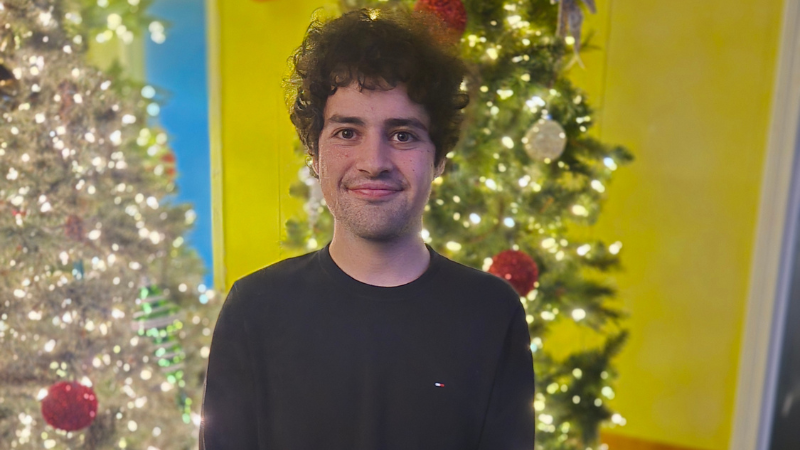
In this installment, we’re sharing a conversation with Hugo, who reflects on growing up autistic, navigating adulthood, and pursuing personal and professional goals while embracing his identity. Hugo speaks openly about his interests, work, volunteerism, and his journey toward independence, self-understanding, and healing. His insights remind us that autism is a way of being, and that support, understanding, and opportunity matter at every stage of life.
Below, you’ll find my questions in bold, followed by Hugo’s responses in regular format.
What is your name?
Hugo Peixoto
Do you refer to yourself using person-first or identity-first language (person with autism or autistic person)? Is there anything you want people to know about why you choose that language?
I prefer “autistic person.” Honestly, I don’t mind if someone uses “person with autism” when referring to me. For me, I always say that I am autistic because that is how I identify myself. It’s a part of my identity.
When were you diagnosed with autism? How did you feel about getting the diagnosis? How did getting the diagnosis impact you?
I was three or four when I was diagnosed. When I was a little boy, I just thought I was weird. I didn’t know I was autistic until I was fifteen. My initial reaction was, “Ohh, that’s why I do this.” But honestly, I was kind of ecstatic in a way because, when I was a kid, I always wanted to be different, and now I am. I have never seen autism in a negative way.
Do you have any special interests or hobbies? What are they? What do you enjoy about your interests or hobbies?
I love pro wrestling, and I just love storytelling, that’s why I’m so into it. I also like anime for the same reasons. What I like about my interests is the storytelling behind them. When you tell a story, you’re able to make people feel something. For example, when reading a folktale, you can create that kind of magic where you move someone or make them feel a certain emotion. I love that.
I got back into reading last year. College kind of killed my enjoyment of reading because it was mostly textbooks. I will say, I did have an English class where we read some Christian texts, but my favorite was Dante’s Inferno because I loved how structured it was. We also read Shakespeare, and I liked books like that, but textbooks are just so boring.
I like to read when the weather is nicer and when there are no distractions. So maybe when it’s warmer, I’ll start reading again. Lately, I’ve been reading more psychology because one thing I love is learning about myself. I’ll read books about autism, so in a way I’m learning about myself. If something is going on with me, I’ll read more about it to understand what’s happening.
Do you have a romantic relationship or partnership? If so, how did you meet your partner?
When it comes to love, I’ve always heard, “Don’t chase, let it come to you.” I’m just trying to live my life right now, so if it happens, it happens. If not, that’s okay. I’ve also read that you can only make yourself happy and if you’re not happy, no one else can make you happy. So true happiness comes from within.
Are you employed or do you volunteer? Is there anything you want people to know about your job?
I work for a school bus company as a bus monitor. I also volunteer at PPAC as an usher.
How and when did you first become connected to The Autism Project? Is there anything you would like to share about your connection with The Autism Project?
I want to say 2024. My friend Kristy was one of my occupational therapists in high school, and she recommended me to The Autism Project (TAP) and the rest is history. I joined TAP’s adult programming, Unity Community.
This was my first time really connecting with TAP, but I remember back in high school I did my senior project on autism, and one of the women who worked here came to speak at my school. I’ve also been volunteering at the Walk since I joined as a member.
What are your favorite things to do with friends or family?
As adults, I think it’s really hard to make friends because we have so many responsibilities. I do have friends, it’s just hard to find time to get together. I’m a go-with-the-flow kind of guy. If we’re going out to eat, I’m all for it. I just like spending time with people I really care about and love.
With family, it’s the same thing. I like to hang out, eat, talk, etc.
What accomplishments—academic, personal, or professional—are you most proud of?
Graduating college! It’s going to be five years since I graduated, but college was brutal. I was depressed, and looking back, I feel like I was suited for college academically, but as an autistic adult dealing with all the stress, it was a lot. I went to Rhode Island College (RIC) and studied social work, but I had to switch majors after the pandemic and some unfortunate circumstances. Luckily, I had a professor who helped me at the time and got me into another program. Now I have a bachelor’s degree in arts and social sciences. I graduated with a 3.6 GPA.
I’m also proud of my job. It took me a while to get connected with my company. It feels like it’s so hard to find a job nowadays, and I went through a lot before landing this one. So I’m proud that I was able to get a job at DATTCO, and I’m also proud of my volunteer work at PPAC.
I remember in 2022, I was talking to one of my friends who also works at PPAC on one of the worst days of my life. I was going through a lot, my depression was at an all-time high, I had intrusive thoughts, and I remember her saying, “I’m proud of you.” That was when I first started at PPAC, and it meant a lot that she recognized me for trying something new. I love theatre and performing. My big dream is to be on stage performing.
What are some goals you’re working toward—personally, professionally, or academically?
Professionally, I would like to become an actor. I love entertainment and storytelling, and I want to be able to tell a story.
Personally, I would like to take driver’s ed classes, get my permit, and eventually get my driver’s license. Other than that, I’ve been dealing with overthinking for the past eight years. I’d say I’m a survivor of childhood trauma—emotional abuse, to be exact. One achievement I’m proud of is going to therapy and seeing a psychologist. It has really helped me heal my inner child. My parents broke my heart, and I’ve been working to fix that. A few years ago, things were really bad, but I feel like my mind has been calming down. I feel like I’m almost there. My brain is just trying to protect me because it doesn’t want me to get hurt again.
The thing about my parents is that I don’t hate them. I forgive them, and I still love them. I’ll always be thankful for what they’ve done. Do I like them personally? No. But I feel like I’m almost at the finish line of healing, and I’m really blessed because I have people in my life who I consider family.
I read the book We’re Not Broken: Changing the Autism Conversation by Erik Garcia, and there’s a quote by James Sinclair that says, “Autism is a way of being; it’s not possible to separate the person from the autism. When parents say, ‘I wish my child did not have autism,’ what they are really saying is, ‘I wish the autistic child I have did not exist.’” I can understand a parent’s point of view, but when we hear this, it can sound like you wish we didn’t exist, because we identify as autistic.
Housing is another personal accomplishment I’m proud of. I met with a case manager and started working on housing applications. I haven’t heard anything back yet, but I’m proud of taking those steps on my own instead of relying on others.
What do you want more people to understand about autism, especially in adulthood?
I read Adam’s response in one of the recent blogs, and he mentioned that there are a lot of services for children, but not many for adults. I think a lot of people believe autism goes away once you’re an adult, and it doesn’t. We still need support as adults, too. It’s not a disease, and it’s not something we can control.
When I was a kid, I remember my parents talking about a magazine story about someone who “overcame” autism. My parents feel like I can control my autism and my thinking—that I can overcome it, but that’s not the case. We’re not in a coma where we wake up and snap out of it. Our brains are just different.
What do you want employers to understand about autism?
I think it’s important to understand that we can have different sensitivities. My job is very good because I’m not the only adult with a disability working at DATTCO. I feel like the people I work with understand where I’m coming from.
What do you think doctors should understand about autism?
It’s not a disease that can be cured. I know some people want that, but for myself and many others, we would lose a part of our identity if there were a cure.
Is there anything else you want people to know about you?
I’d like people to know that you might think one thing when you first see or interact with me, but once you get to know me, you’ll probably have a different opinion than your first impression.
We are grateful to Hugo for sharing his experiences, insights, and reflections with honesty and heart. His story is a powerful reminder that autistic adults are multifaceted individuals with goals, talents, relationships, and dreams—each deserving of understanding, respect, and opportunity.
Thank you, Hugo, for sharing your voice with our community.
Gianna Cambria
Marketing & Communications Officer