


Voices of the Spectrum: Conversations with TAP's Autistic Adults #12
Welcome to another installment of Voices of the Spectrum, a series dedicated to sharing the authentic stories, experiences, and perspectives of autistic adults within The Autism Project (TAP) community. Each interview highlights the individuality, strengths, and lived experiences of our members.
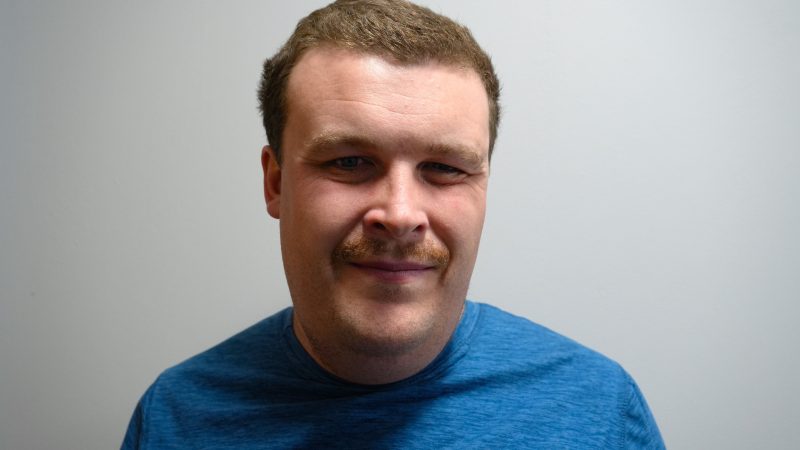
In this installment, we’re sharing a conversation with Liam, who reflects on being diagnosed in adolescence, navigating independence in adulthood, and finding confidence through work, volunteering, sports, and the arts. Liam speaks openly about identity, self-worth, relationships, and his goals for the future — including returning to college and continuing to build independence. His responses remind us that autism is a spectrum, that growth looks different for everyone, and that opportunity and dignity matter at every stage of life.
Below, you’ll find my questions in bold, followed by Liam’s responses in regular format.
What is your name?
Liam Shaughnessy
Do you refer to yourself using person-first or identity-first language (person with autism or autistic person)? Is there anything you want people to know about why you choose that language?
I use both interchangeably. I don’t feel that I am disabled. My disability does not define me in most scenarios.
When were you diagnosed with autism? How did you feel about getting the diagnosis? How did getting the diagnosis impact you?
I was diagnosed in the hospital when I was approximately 14 years old. It was a little surreal at first. I didn’t really feel disabled at first, but as I learned more about autism through personal research and medical professionals, it started to make a whole lot of sense to me.
The diagnosis was a little overwhelming, but I learned to live with it. The first few years didn’t really affect me until college. I quit junior year because I realized that I felt like everyone around me was ahead of me in life and had more independence. I still have one year left of college. I went to the University of Rhode Island from 2015–2018.
Do you have any special interests or hobbies? What are they? What do you enjoy about your interests or hobbies?
I have A LOT of special interests. I love everything about theater, arts, books, and music.
I enjoy all books, but mostly I read non-fiction and fantasy books. These are my top two. There are so many genres, it’s hard to choose a favorite. I’m also involved in EGSO unified sports. I feel that my interest in these things validates my existence, and that books sometimes can transport me to another world to escape.
Are you employed or do you volunteer? Is there anything you want people to know about your job?
Both interchangeably. I volunteer at the Odeum Theatre in my hometown, East Greenwich, and I love it there. Everybody embraces me, and I feel self-worth working in an area that I love. It’s also walkable for me.
I also work at Newport Naval College, and I like my job there as well. It feels good to be working part-time every day for three hours, 4–5 days a week, fifteen hours a week, making money and contributing. It’s a janitor’s position, and I’ve only had it for a few months. I sweep and help clean bathrooms across 3–4 floors. I would like to work here for at least five years.
How and when did you first become connected to The Autism Project? Is there anything you would like to share about your connection with The Autism Project?
Around ten years ago, when I was 18 years old, through Lisa McKay, who is an old and dear friend of mine. She was also my adaptive PE teacher for half my life — through elementary school, middle school, and high school. Lisa McKay has always been a mentor to me in and out of the classroom. She introduced me to The Autism Project, and I find that the organization gives me a sense of spiritual and emotional well-being that suits my needs.
Do you like spending casual time one-on-one with people, in small groups, or in large parties?
Interchangeably, depending on my interests. I enjoy both depending on the scenario and circumstances.
What are your favorite things to do with friends or family?
Quite a few things. I like to go to the movies, play unified sports, ski, and generally travel with some or all of my family. Every other two years, my family and I go somewhere big in the West or upper New England to go skiing. We usually spend a long weekend, 3–4 days there, and I go down the blue slopes and some black ones. The joke is that the blue and black ski slopes are the same for the upper East Coast — it’s not that extreme.
Do you have a romantic relationship or partnership? If so, how did you meet your partner?
Yes, to both. My dear friend Courtney is a good partner, and we share common interests and hobbies. We met at two different places. We met at a previous job on the Navy base, ironically, but a different part. And we met at Job Club before I had a job. She has been my girlfriend for about a year or two.
What accomplishments — academic, personal, or professional — are you most proud of?
Quite a few. One is living in an apartment and forming more independence for myself, as well as developing more real friendships. I am also proud of winning the Unified National Volleyball Championships in high school in Kentucky. Even though I wasn’t there spiritually in Utah, there were two separate Unified High School Volleyball Championships. And I am going to the final basketball game this season before the tournament in North Kingstown.
What are some goals you’re working toward — personally, professionally, or academically?
I would like to earn and save more money to go to concerts or ski trips. One of these concerts I want to go to is in New Hampshire in June. It is Jo Dee Messina’s concert; she is from New England. This one is still a few months away, so we are planning it.
I would also like to go back to college and complete my degree. This is a long-term goal of mine because I have been saying that on and off for almost eight years. I’m nervous about the credits, and now I have a job with other conflicts.
What do you want more people to understand about autism, especially in adulthood?
That it is a spectrum and not to be stereotyped like in film or other forms of media. Each person is a unique individual. It’s called autism spectrum.
What do you want employers to understand about autism?
That almost all of us as people with autism and other neurodivergence can learn and be productive if given an opportunity — just like normal people — for a job and other activities.
What do you want colleagues to understand about autism?
That all of us should be given a sense of fair play and that all of us should be treated with dignity and have an opportunity for a job and normal socialization.
What do you think doctors should understand about autism?
Again, that it is a spectrum. Sometimes we can have a very high pain tolerance, and therefore we may need assistance with understanding when we need help medically. I have been in plenty of situations where I need help with this, especially at my annual checkups.
What are the greatest misunderstandings about autism?
We are NOT all like “Rain Man,” and it’s a broad spectrum. We are each individual and unique in our own way.
Is there anything else you want people to know about you?
My personality traits are kindness, being loving, openness, and being social. But I do struggle with life skills.
We are grateful to Liam for sharing his experiences, insights, and reflections with honesty and heart. His story is a powerful reminder that autistic adults are multifaceted individuals with goals, talents, relationships, and dreams — each deserving of understanding, respect, and opportunity.
Thank you, Liam, for sharing your voice with our community.
Gianna Cambria
Marketing & Communications Officer